


A New Report Examines How Judges’ Corporate Backgrounds Could Skew Fair Outcomes for Consumers
Research shows that fewer than 7% of business court judges are former public defenders, legal aid attorneys, or lawyers that represent injured workers and consumers
Sixty-three percent of Americans live in a state with a business court – yet many are unaware these courts exist. Though business courts are intended to hear cases between businesses, a significant number of states hear cases that include workers and consumers, typically relating to product liability, unfair trade practices, misrepresentation, or contract disputes. The judges in these courts can be very powerful. “In Delaware and some other states, there are no juries in these courts. Without a jury of ordinary citizens, the decisions are left solely to a single judge or a panel of judges, making it essential that the public know who these judges are.”
A new report “Imbalanced Justice: U.S. Business Courts,” released by People’s Parity Project reviews the professional backgrounds of the 213 business court judges in 26 states and finds that:
- In seven states – Arizona, Delaware, Massachusetts, New Hampshire, North Carolina, Tennessee, and Texas – more than 90 percent of the business court judges are former corporate lawyers.
- Nationwide, 46 percent of all business court judges are former corporate lawyers.
- Less than seven percent of American business court judges have experience working as public defenders, Legal Aid attorneys, or lawyers that represent injured workers and consumers.
“Studies show that judges’ backgrounds can influence the outcome of their rulings. If ordinary people end up in a business court staffed with former corporate lawyers, they would have good reason to question whether the outcome will be fair—or biased in favor of the corporation they are facing,” said Billy Corriher, State Courts Manager of People’s Parity Project, and report author.
Research supports the connection between professional experience and judicial outcomes. A 2022 study found that former public defenders were “less willing to render extremely long sentences tantamount to life in prison.” Another recent study found that former prosecutors and corporate lawyers were less likely to rule for workers. Finally, a People’s Parity Project’s report from 2024 found that Housing Court judges in Connecticut who previously worked as corporate lawyers and prosecutors were more likely to evict people than judges with experience representing people. Together, these findings underscore the need to prioritize professional judicial diversity.
Finally, the report offers recommendations on how to address these disparities that include: a) Including judges with public defense or Legal Aid experience in business courts involving consumers or workers; b) Business courts that have overwhelmingly former corporate lawyers should only hear cases that involve businesses and corporate matters; c) Assuring that all parties to the litigation must agree to the business court forum; and d) Judges and legislators should ensure maximum transparency for these courts, as well as the process for appointing judges.
“As more states across the country are quickly moving to establish business courts, it is critical that judges have professional experience beyond representing powerful corporations and wealthy people if everyday people’s cases are heard there. Voters should demand that governors and other elected officials make that a priority,” said Molly Coleman, Executive Director of People’s Parity Project.
The People’s Parity Project is organizing lawyers and law students who are committed to ensuring the legal profession is on the right side of history
Follow PPP
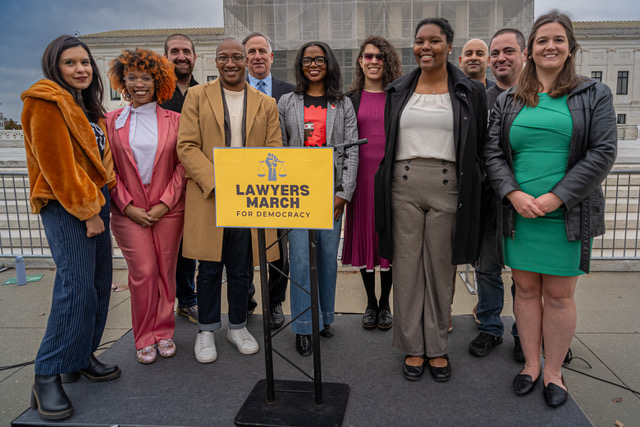
LAWYERS MARCH FOR DEMOCRACY ON THE SUPREME COURT
Lawyers, Jurists, Law Students, and Elected Officials Rally at Supreme Court to Defend the Constitution…

Nov. 15: Lawyers March for Democracy at Supreme Court
MEDIA ADVISORY FOR: November 15, 2025 CONTACT: Julie Blust, [email protected] LAWYERS MARCH FOR DEMOCRACY URGES ‘COURAGE…